
Fikr-i Itibar
The Story of a Tower, a Road, and an Idea.
Empires rise and fall along the Silk Road, but some places become more than trading posts.
They become centers of trust.

The Silk Road and the Currency of Trust
The Silk Road was not only a network of trade routes. It was also a network of reputation. A merchant who lost trust in one city would struggle to reach the next. A leader who lost credibility could lose an entire market. Trust traveled faster than caravans. Reputation was the invisible currency of the road. The Burana Tower became a visible symbol of that invisible value. Even after the city vanished, the tower continued to say: The road is still here. The direction is still here. The memory is still here.
The Idea Behind Fikr-i Itibar
Fikr-i Itibar was inspired by that idea. It is not simply a PR platform. Not only a production studio. Not only a trade organization. It is an attempt to build modern landmarks of reputation. Structures that stand above the noise of markets, crises, and short-term visibility. Structures that help companies and institutions navigate complex global landscapes. Just like the tower once guided caravans across the Silk Road.
Today the world is entering another age of transformation.

From Story to Reality
Today the world is entering another age of transformation. Energy routes are shifting. Supply chains are reorganizing. New alliances are emerging. Every institution is navigating uncertainty. In such moments, visibility is not enough. What matters is direction. Balasagun teaches a simple lesson: Cities may fall. Markets may collapse. But when reputation is built with wisdom and long-term vision, it becomes a landmark that guides the future.
We believe the way of trust
We believe in building structures that outlast cycles. We believe reputation is not a campaign. It is an architecture. We believe trust is the most strategic asset in global trade. And we believe a single idea — when positioned correctly — can become a tower visible across generations. But the structures that guide direction remain. A thousand years ago, a tower stood on the Silk Road. Today, a new idea stands at the crossroads of reputation, strategy, and trade. Fikr-i Itibar. Because some structures do not simply stand. They show the way.
The Founding Spirit of Fikr-i Itibar
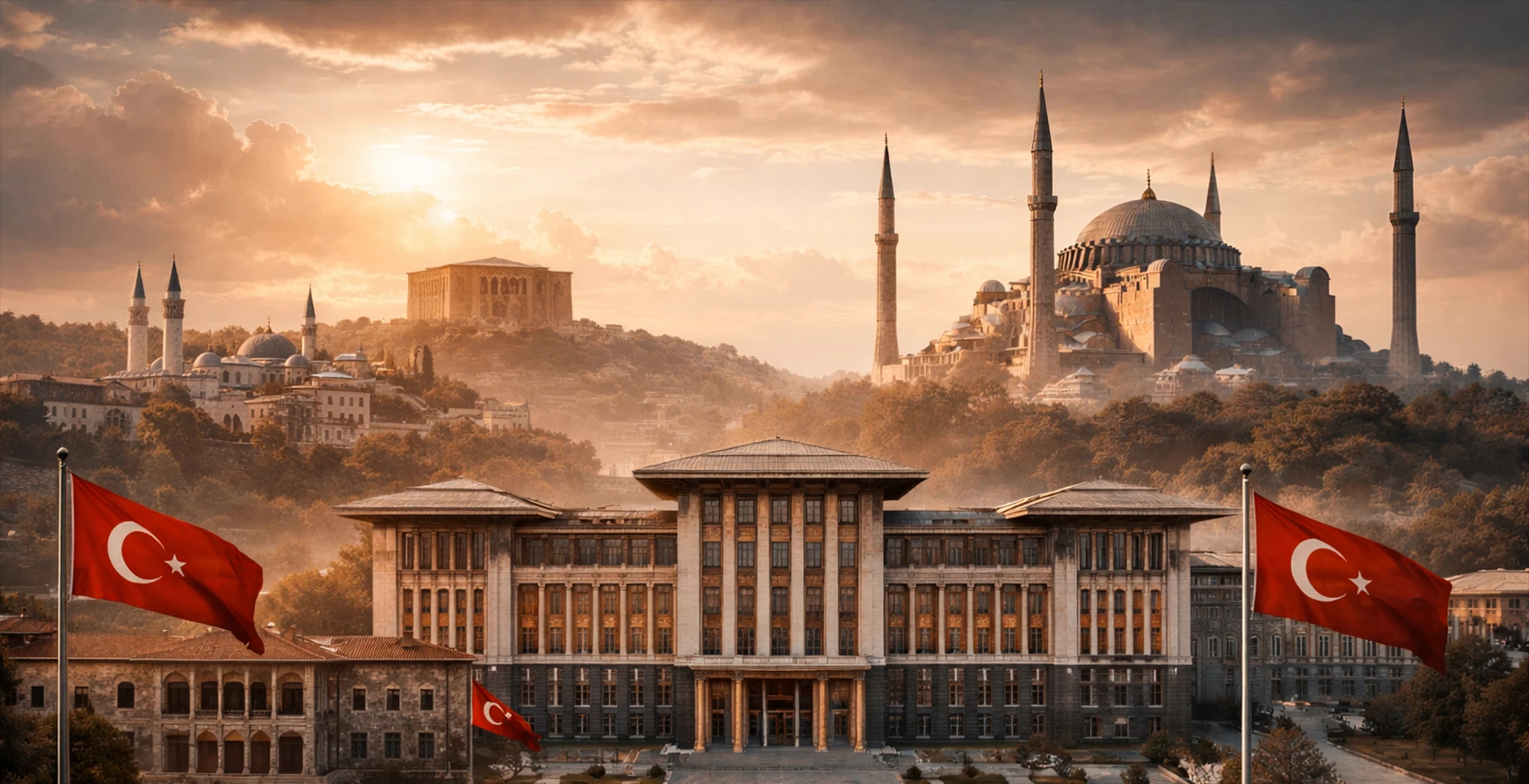
The Founding Spirit of Fikr-i Itibar
The origins of Fikr-i Itibar are rooted in a long civilizational memory.
Its founders come from the circle of families connected to Sheikh Edebali, one of the founding figures of the Ottoman civilization. For centuries, the Edebali lineage and their close companions represented a tradition where leadership, commerce, and moral responsibility were inseparable.
These same circles were also among the early builders of the Ahi Brotherhood, a unique institution that shaped the economic and ethical life of Anatolia.
The Ahi tradition did not simply regulate trade.
It defined the principles of trust, reputation, fairness, and craftsmanship.
In that system:
- Commerce was inseparable from ethics.
- Wealth was inseparable from responsibility.
- Reputation was the foundation of economic power.
A merchant without reputation could not trade.
A craftsman without integrity could not lead.
For centuries, this culture created resilient networks of trade stretching across Anatolia and beyond.
From Ahi Tradition to Modern Strategy
Fikr-i Itibar carries this heritage into the modern world.
While markets, technologies, and geopolitical realities have changed, the core principle remains the same:
Reputation is the most valuable currency of commerce.
Just as the Ahi institutions once created trust-based trade networks across the Silk Road, Fikr-i Itibar works to build modern structures of reputation that connect industries, institutions, and global markets.
The project stands at the intersection of:
- Strategic communication
- International trade organization
- Cultural and reputational capital

It was built to be seen from far away.
A vertical sign on the Silk Road.
A signal that said:
“You are on the right path.”

Fikr-i İtibar